
What It Actually Takes to Launch D2C as an Established Brand
Date Published

- Why Established Brands Face Different Challenges than D2C Startups
- Why More Enterprise Brands and B2B Merchants Expand into D2C
- The Five Biggest Challenges Launching D2C as an Established Business
- Designing and Building Your D2C Storefront
- From Strategy to Storefront: KONG's D2C Launch
- Bringing It All Together
Most advice about launching a direct-to-consumer (D2C) business is written for startups. It assumes you're building a brand from the ground up, choosing your first ecommerce platform, and acquiring your first customers.
For established and enterprise brands, the challenge is different.
You already have decades of brand recognition, strong relationships with retailers or distributors, or an established B2B ecommerce operation serving wholesale customers. Your products are proven. Your operations are mature. Your business already works.
Launching D2C isn't about starting over. It's about introducing a new sales channel without disrupting everything you've already built.
That means answering questions a startup rarely has to consider:
- How do we protect existing retail, distributor, or B2B relationships?
- How should D2C pricing work alongside wholesale pricing?
- Can our ERP, PIM, CRM, and other systems support another sales channel?
- Does our existing ecommerce experience work for new customers?
- How do we align marketing, sales, IT, operations, and leadership around the launch?
Whether you're an enterprise brand launching ecommerce for the first time or a B2B merchant expanding your existing ecommerce operation into consumer sales, these decisions can have implications far beyond your website.
Here's what to consider before you launch.
Why Established Brands Face Different Challenges than D2C Startups
A startup builds its business around direct-to-consumer sales from day one. Every decision is designed with a single audience in mind, from branding and pricing to fulfillment and customer service.
Established businesses don't have that luxury.
An enterprise brand introducing ecommerce after decades of selling through retailers, distributors, dealers, or other channel partners has valuable relationships to protect. D2C needs to complement those channels rather than compete with them.
KONG Company is an excellent example of a company that made this work.

Consumers already knew and purchased KONG products through retailers around the world. The opportunity wasn't to replace that successful model. It was to add an owned ecommerce channel where the company could build a direct relationship with consumers and have greater control over the digital brand experience.
A B2B merchant faces a different starting point. B2B merchants already have a sophisticated ecommerce operation built around negotiated pricing, customer-specific catalogs, purchase orders, bulk ordering, and ERP integrations. Expanding into D2C means adapting that infrastructure for consumers without compromising the B2B experience.
Different starting points, similar challenge: you're introducing a new sales channel into a business that already works.
That creates ripple effects across the organization:
- Pricing: How will D2C pricing coexist with wholesale or distributor pricing?
- Technology: Can existing systems support another customer type and order flow?
- Operations: Will fulfillment, shipping, and returns work differently?
- Marketing: How will you speak directly to consumers without confusing existing audiences?
- Customer experience: What needs to change when the end user becomes the buyer?
The website is only one piece of the equation.
Why More Enterprise Brands and B2B Merchants Expand into D2C
Direct-to-consumer ecommerce isn't replacing wholesale, retail, or B2B sales. It’s becoming another way for established companies to serve customers while strengthening the business as a whole.

Selling D2C gives businesses:
- A direct customer relationship. Understand who is buying, how they're shopping, and what they want next.
- Greater control over the brand experience. Own product storytelling, education, merchandising, and the buying journey from discovery through checkout.
- First-party customer data. Build a clearer picture of customer behavior to inform marketing, product development, and retention.
- New revenue opportunities. Introduce subscriptions, bundles, accessories, exclusive products, or other offerings designed specifically for consumers.
- More flexibility across channels. Diversify revenue while continuing to support retailers, distributors, and B2B customers.
For companies already selling B2B online, the opportunity starts from an existing ecommerce foundation. The challenge is extending that foundation to consumers while preserving the pricing, functionality, and workflows business buyers rely on.
For brands like KONG, the opportunity starts somewhere else. Consumers already knew and purchased KONG products through retailers, but KONG didn't own the ecommerce transaction or direct customer relationship. Its D2C storefront created that connection while giving the company greater control over merchandising, product education, and the digital brand experience.
D2C didn't replace KONG's retail business. It added a capability the existing model didn't provide.
The Five Biggest Challenges Launching D2C as an Established Business
Launching D2C introduces a new set of considerations for an established business.
Your new channel needs to work alongside existing sales relationships, technology, operations, pricing strategies, and customer experiences.
Before selecting a platform or designing a storefront, businesses should consider five key areas.
1. Balancing D2C with Existing Sales Channels
For many established brands, one of the first concerns isn't technology. It's how D2C will fit alongside the channels that already drive the business.
Retailers, distributors, dealers, and resellers may play an important role in how customers discover and purchase your products. For B2B merchants, wholesale buyers may rely on established pricing, ordering processes, and account relationships.
A D2C strategy needs to account for those relationships from the beginning.
That doesn't mean every channel has to offer the same experience. Brands can differentiate D2C through:
- Exclusive products or bundles
- Deeper product education
- Subscriptions and replenishment
- Loyalty programs
- Direct customer support

KONG took this complementary approach. Instead of replacing the retail presence that helped build the brand, it created an owned channel where the company engages consumers directly, expands product education and merchandising, and builds a customer relationship beyond the retail shelf.
2. Developing a Pricing Strategy That Works for Multiple Audiences
Pricing becomes more complex when a business serves both wholesale and consumer customers. What works for one audience may not work for another.
B2B buyers may expect:
- Negotiated pricing
- Customer-specific discounts
- Contract pricing
- Volume-based terms
D2C customers may expect:
- Promotions
- Product bundles
- Subscription discounts
- Seasonal offers
Your ecommerce site needs the functionality to put that pricing strategy into practice. Depending on your business model, that may mean displaying different prices by customer group, supporting customer-specific or volume pricing, managing promotions and discounts, or controlling which products and offers are available to different audiences.


Simply applying retail pricing to an existing catalog isn't enough. Your pricing strategy needs to support different customer segments while protecting existing relationships and maintaining consistent brand positioning.
3. Creating a Consumer Experience That Reflects Your Brand
Selling directly to consumers changes how people interact with your brand throughout the buying journey.
Business buyers arrive knowing exactly what they need and prioritize speed, account-specific information, and efficient ordering. Consumers discover new products, compare options, look for guidance, and build confidence before making a purchase.
For established brands, the challenge is translating an existing brand into a digital experience that meets those expectations without losing what already makes the brand recognizable.
That may mean rethinking how you approach:
- Product discovery and navigation
- Education and storytelling
- Merchandising and recommendations
- Reviews and other trust signals
- Promotions and loyalty
- Mobile shopping and checkout
Ready to Build Your DTC Channel?
Whether you're launching your first direct-to-consumer storefront or expanding an existing ecommerce business, we'll help you develop the right strategy, technology, and customer experience for long-term growth.
The goal is to create an experience designed around how consumers shop while staying true to the brand customers already know.
4. Integrating D2C Into Your Existing Technology Ecosystem
Behind every successful D2C storefront is a network of systems managing product information, inventory, orders, customer data, fulfillment, marketing, and more.
Enterprise brands launching D2C must determine how the new storefront fits into that existing ecosystem. Your ERP, PIM, CRM, fulfillment systems, and ecommerce platform need clearly defined roles and reliable data flows to support both customer experience and internal operations.
Questions to address early include:
- Will you share inventory between channels?
- How will D2C orders flow into the ERP?
- Where will product information and customer data live?
- Will fulfillment processes change?
- Can existing integrations support both B2B and D2C workflows?
- Are there opportunities to automate manual processes?
5. Building Internal Alignment Before Development Begins
Some of the biggest obstacles to a successful D2C launch happen inside the organization.
Launching a new sales channel affects teams across the business. Without alignment, projects can stall as teams revisit decisions that should have been resolved during planning.
Successful D2C initiatives begin with clear objectives, defined responsibilities, and a shared roadmap. That doesn't eliminate every challenge, but it makes decisions throughout the project considerably easier.

Designing and Building Your D2C Storefront
Designing the D2C Buying Journey
Once you've defined the experience you want to create, the next step is translating that strategy into the storefront itself.
That means considering the entire buying journey:
- Navigation and site flow: Make it easy for customers to browse categories, search products, and understand where to go next.
- Visual hierarchy: Structure homepage, category, and product pages so important information and actions stand out.
- Product education: Give shoppers the imagery, descriptions, comparisons, FAQs, videos, and other content they need to make informed decisions.
- Reducing friction: Remove unnecessary steps and uncertainty throughout the path to purchase.
- Mobile-first design: Make browsing and buying intuitive across screen sizes and touch interactions.
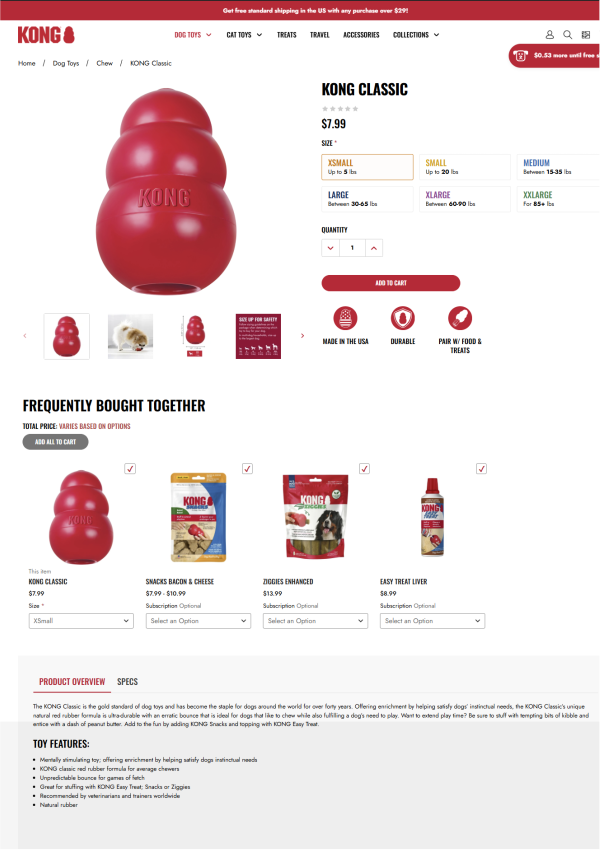
For KONG, that meant translating a brand consumers already recognized from retail shelves into an experience built specifically for digital discovery and shopping.
High-quality lifestyle imagery, educational content, recipes, webinars, and intuitive product organization give customers more opportunities to engage with the brand while helping guide them toward the right products.
For example, KONG Cuisine combines products with recipes and educational content, helping customers understand different ways to use KONG products while extending the brand experience beyond the product page.

The strategy also extends into smaller interactions throughout the buying journey.
KONG's slide-out cart keeps shoppers in the experience while displaying a free shipping progress indicator and relevant product recommendations. Customers can see how close they are to earning free shipping, discover complementary products, and continue shopping without disrupting their path to checkout.

For businesses already operating a B2B ecommerce site, expanding into D2C may require rethinking parts of the existing customer experience. Navigation, merchandising, search functionality, promotions, and checkout are often optimized differently for wholesale buyers than they are for consumers.
That doesn't necessarily mean building an entirely separate experience, but it does mean understanding that different customer segments have different priorities.
Connecting the Frontend Experience to Backend Operations
The experience promised on the frontend has to be supported by the systems and operations behind it.
If a product page says an item is available, inventory data needs to be accurate. If you promise fast shipping, fulfillment systems need to support it. If customers see specific pricing or product information, the systems supplying that data need to stay in sync.
The frontend shapes the customer experience. The backend makes that experience possible.
The customer-facing side includes:
- Design and UX
- Product discovery and presentation
- Site speed and performance
- Pricing and promotions
- Checkout
Behind the scenes, systems such as your ERP, PIM, CRM, fulfillment platforms, and other integrations keep the data and operations supporting that experience moving.
KONG's D2C build shows what this looks like in practice. Our developers connected its BigCommerce storefront with Microsoft Dynamics 365 Business Central, Amplifi PIM, and HubSpot, bringing the new consumer channel into KONG's broader technology ecosystem rather than creating another standalone system.
Each platform supports a different part of the experience, from product information and inventory to customer data and marketing.

Planning your store’s integrations early also helps prevent duplicate data, manual workarounds, and disconnected customer experiences after launch.
Designing for Discoverability and Trust
For established brands moving into D2C, the opportunity is controlling how your customers discover, understand, and build confidence in the brand.
That means prioritizing:
- Search-friendly structure: Organize navigation, categories, product information, and content so customers and search engines can understand your site.
- Site performance: Optimize images, code, and page elements to create a fast, responsive experience across devices.
- Trust signals: Make reviews, FAQs, shipping and return policies, customer service information, and other reassurance easy to find.
- Brand consistency: Carry recognizable messaging, imagery, and visual identity throughout the storefront.
- Accessibility: Create an experience that can be navigated and understood by as many customers as possible.
These elements are all part of a strong user experience. Fast performance makes a site feel more reliable, clear policies reduce uncertainty, helpful content supports confident product decisions, and consistent branding reassures customers that they're buying directly from a company they already know and trust.
For KONG, moving into D2C meant creating a website that could do more of the work traditionally handled by retail packaging, merchandising, and in-store discovery. Search-friendly product and category pages make the catalog easier to find and navigate, while detailed product information and educational content give shoppers more context as they decide what is right for their pet.
Choosing the Right Ecommerce Platform
Once the business strategy is clear, the next question is, "Which ecommerce platform should we use?"
The best platform is the one that supports your long-term business objectives, integrates with technology you want to keep, and provides the flexibility to grow as your business evolves.
Before choosing an ecommerce platform, ask:
- Can it support both B2B and D2C if our business requires it?
- Will it integrate with our existing ERP, CRM, PIM, and other business systems?
- Does it offer the flexibility to support our customer experience goals?
- Can it scale with increased traffic, product catalogs, and order volume?
- What will ongoing maintenance and ownership look like?
For many established businesses, the conversation often comes down to BigCommerce and Shopify. Both offer strong ecosystems and enterprise capabilities, but they take different approaches to customization, B2B functionality, extensibility, and overall architecture.
We encourage you to evaluate platforms based on their operational requirements, long-term growth strategy, and existing technology stack. The right choice isn't necessarily the most popular platform—it's the one that best supports your business.
What the D2C Channel Launch Process Looks Like
While every implementation is different, successful D2C launches tend to follow a similar path.
- Discover. Define business goals, customer needs, existing technology, operational requirements, and project constraints.
- Strategize. Map customer journeys, select the right platform, plan integrations, establish priorities, and create a roadmap.
- Design. Translate the brand into an intuitive consumer experience built around discovery, education, and conversion.
- Develop & Integrate. Build the storefront, functionality, and connections between ecommerce and the systems supporting the business.
- Test & Launch. Validate checkout, integrations, analytics, reporting, performance, browsers, devices, and operational workflows.
- Optimize. Use customer behavior, analytics, operational insights, and evolving business goals to continually improve the experience.
Launch day isn't the finish line.
The most successful D2C businesses continue optimizing their storefront based on customer behavior, analytics, operational insights, and evolving business goals. Ecommerce is an ongoing investment, not a one-time project.
From Strategy to Storefront: KONG's D2C Launch
KONG's D2C launch brought the pieces we've discussed throughout this article together in one connected ecommerce experience.
The new BigCommerce storefront gave KONG a direct path to consumers without separating D2C from the rest of the business.
Custom UX and development shaped the shopping experience, while integrations connected the storefront to the systems KONG already relied on for product information, customer data, marketing, and operations. The result was a new sales channel built into KONG's existing business rather than existing alongside it.

KONG didn't need to reinvent the business to sell D2C. It needed an ecommerce channel designed to work with the business it had already built.
Read our full KONG case study to learn more about the strategy, design, and technology behind the project.
Bringing It All Together
Launching a direct-to-consumer channel is about much more than building an ecommerce website.
For established brands, it means creating a new way to engage customers while protecting the relationships, systems, and operations that have already contributed to the company's success. For B2B merchants, it means expanding beyond wholesale without losing the efficiencies that make their existing ecommerce business successful.
Businesses that approach D2C strategically are better positioned to avoid costly missteps, align internal teams, and build a customer experience that supports long-term growth.
Ready to Launch Direct-to-Consumer?
Whether you're an established brand entering ecommerce for the first time or a B2B merchant expanding into direct-to-consumer sales, our team will help your businesses develop the strategy, technology, and customer experience needed for a successful launch.
Learn more about our Enterprise D2C Launch services or contact our team to start the conversation.